Expressive Art Therapy

Expressive Arts Therapy Overview
My work is rooted in the Person-Centered Expressive Arts tradition of Natalie Rogers and the Jungian and transpersonal lineage of CIIS. Expressive arts therapy centers on process rather than product, engaging sound, movement, writing, and image to invite nonverbal experience into awareness.
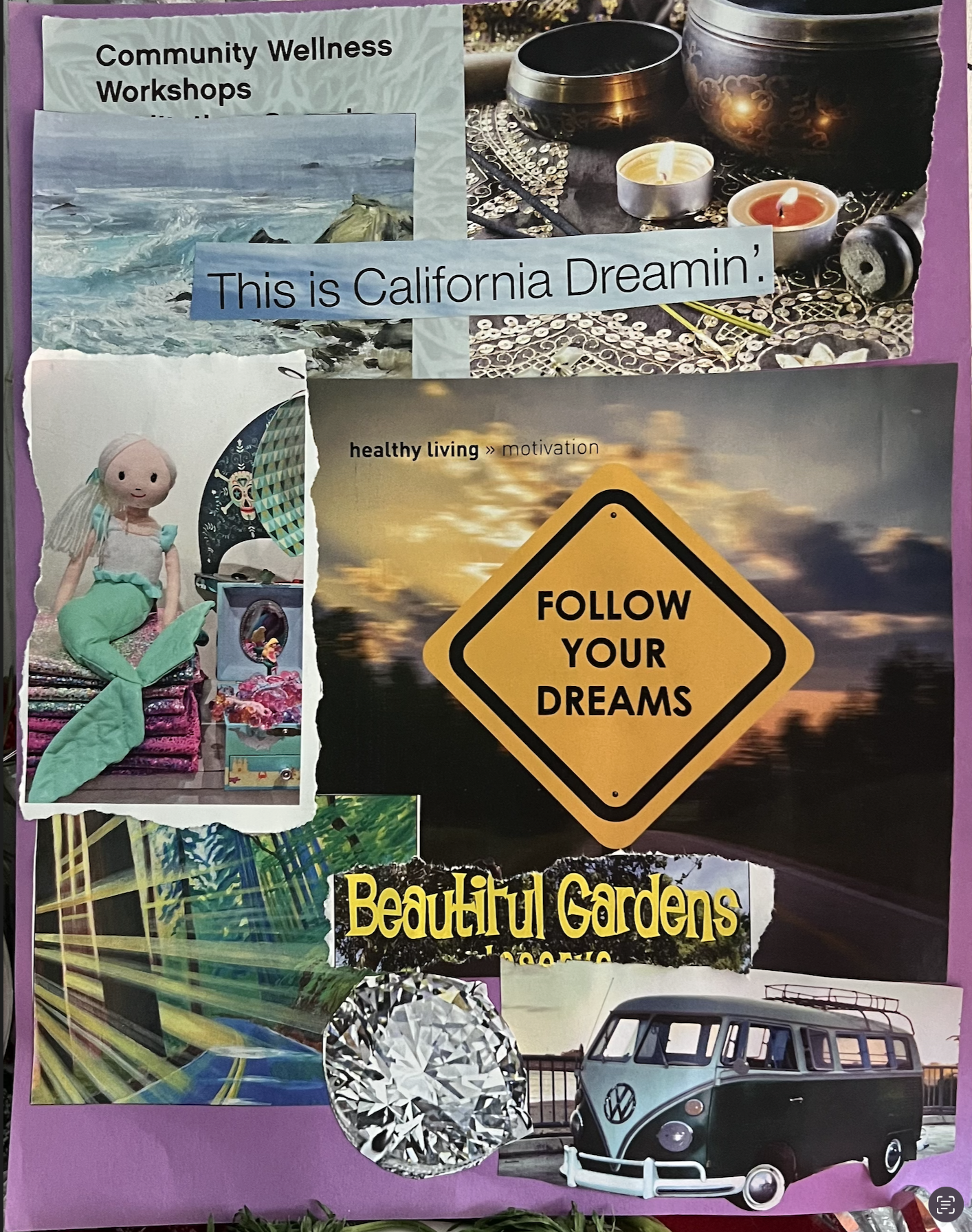
At California Dreamin’ Expressive Arts Therapy, creativity becomes a bridge between unconscious experience and conscious understanding, supporting integration, meaning, and healing through authentic expression.
Benefits of Expressive Arts Therapy
Creative expression carries us into the liminal space where body and mind meet. Through writing dialogue with inner parts, shaping a story, making sound or music, or moving with a feeling, thought meets breath and voice, and imagination forges new neural pathways.
Expressive arts therapy supports relief from stress, anxiety, and depression while deepening self-awareness and resilience. As inner experiences take form, confidence grows, motivation returns, and the healing process becomes something you actively inhabit rather than observe.
Our Approach to Expressive Arts Therapy and What to Expect
Expressive arts sessions unfold within a steady, attuned therapeutic relationship that invites curiosity, presence, and exploration. Creativity is woven with mindful awareness so connections naturally emerge between image, movement, sound, and inner experience. As expression deepens, insight follows, allowing the creative process itself to become a bridge between emotion, meaning, and healing.